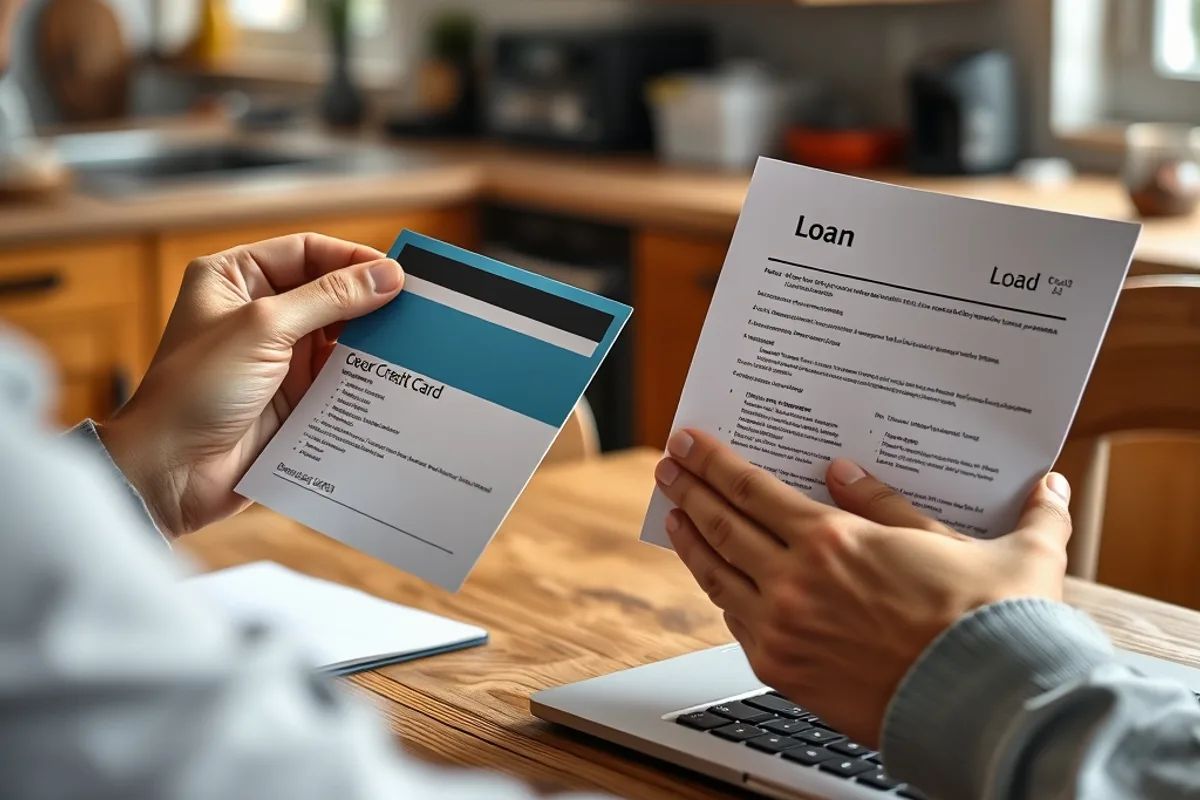
A personal loan advertises a fixed rate and a fixed term. A credit card advertises a low introductory rate and a minimum payment. Both can be the cheaper choice, depending on how much you borrow and how quickly you repay.
This guide compares the total cost rather than the headline rate, with worked examples for a $5,000 expense and a clear list of the traps in both products.
Key facts
- Personal loans usually cost less over a fixed term of several years.
- Credit cards are cheaper only if you clear the balance before the promo ends.
- Compare total repayable, not the monthly payment.
- Late fees and missed payments change the maths entirely.
Compare total cost, not the rate
A loan at 9 percent over three years can cost more in total than a card at 0 percent for twelve months followed by 22 percent for two years, because the card balance lingers. The only fair comparison is the total repayable under your actual repayment plan.
Use the total cost of credit: interest plus arrangement fees plus any compulsory insurance. Then divide by the number of months to see the real monthly burden. A low monthly payment often hides a longer, more expensive term.
When a personal loan wins
A personal loan suits a known, one-off expense that you will repay over a set period: a car repair, a medical bill, a wedding or a home project. The fixed repayment forces discipline and the rate is usually lower than a standard card.
The risk is borrowing more than you need because the monthly payment looks manageable. Stretch a $5,000 loan over five years and the interest adds up. Choose the shortest term you can genuinely afford, not the one with the smallest payment.
When a credit card wins
A credit card is cheaper when you can repay the balance in full each month, because you pay no interest at all. It is also useful for a short, unexpected expense that you can clear within an introductory period.
If you carry a balance beyond the promotional period, the standard rate usually exceeds a personal loan. Store cards are often worse still. The card is only the cheaper option if the repayment is funded and scheduled, not hoped for.

Fees that change the answer
Personal loans may charge an origination fee, a late fee and an early repayment penalty. Some deduct the fee from the amount disbursed, so you borrow $5,000 and receive $4,800 while paying interest on the full amount. Always ask for the APR, which includes the fee.
Credit cards may charge an annual fee, a balance transfer fee and a cash advance fee with a higher rate and no interest-free period. A 3 percent balance transfer fee on $5,000 is $150 before you have repaid a cent.

The cheapest credit is the amount you do not borrow.
The minimum payment trap
Paying only the minimum on a credit card can stretch a modest balance over a decade. The issuer sets the minimum low because it maximises interest income, not because it is good for you.
Set a fixed repayment that clears the balance within a defined period and automate it. If you cannot clear it within twelve months, a personal loan with a fixed term may be the more honest structure. Our loan approval guide explains what lenders assess before they say yes.
Worked example: $5,000 over three years
Take a personal loan at 9 percent APR with a $100 fee. The monthly repayment is roughly $160 and the total cost is about $5,760. Now take a card at 0 percent for twelve months, then 22 percent, repaid at $160 a month. The balance is still large when the promotional rate ends, and the total cost is higher.
Reverse the assumption: repay the card at $450 a month and clear it in twelve months. The total cost is $5,000 plus any annual fee, which beats the loan. The product did not change; the repayment behaviour did.
A decision checklist
Ask four questions. Can I repay this within an interest-free period? Do I need a fixed term to stay disciplined? Which option has the lower total repayable including fees? What happens if my income drops for two months?
If the answer to the last question is that you would miss payments, reduce the amount you borrow or delay the purchase. Borrowing less is always cheaper than finding the perfect product for a loan you did not need.
Official source: consumerfinance.gov.